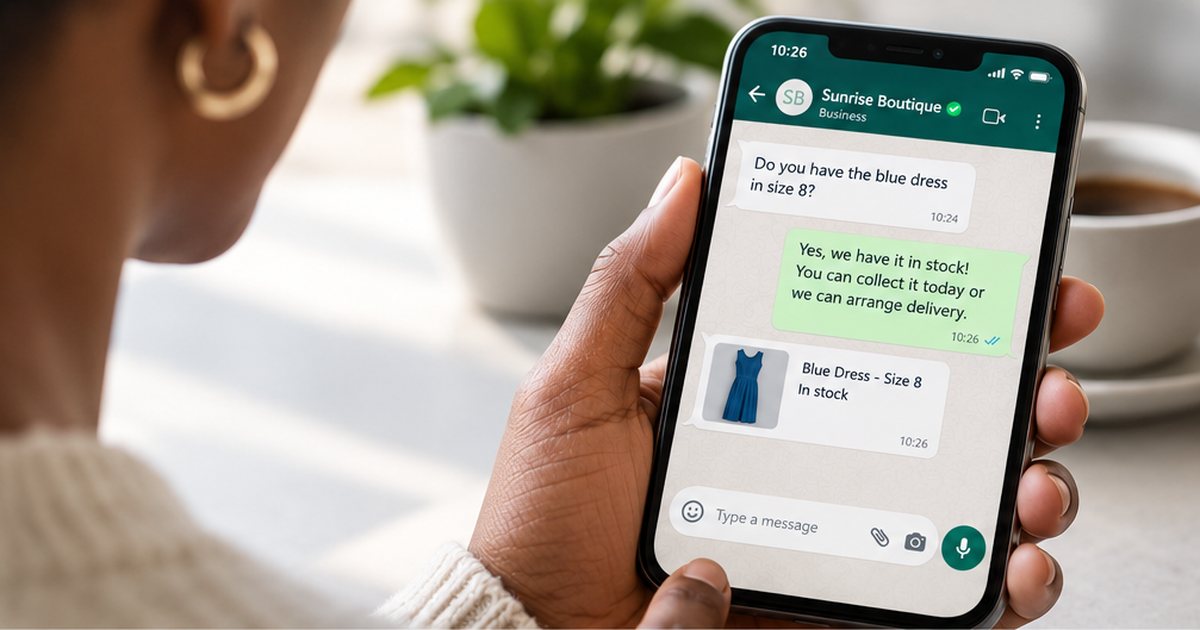
In South Africa, WhatsApp isn’t just a messaging app. It’s the shop counter, the booking line and the complaints desk. Customers check stock, confirm appointments and chase deliveries there, often before they’d ever pick up the phone.
For years, most of those replies cost businesses nothing. That changed on 1 October 2026.
On that date, Meta started charging for more messages on the WhatsApp Business Platform, including some everyday replies that used to be free. Not every message costs money, and the free WhatsApp Business app on your phone isn’t what changed. But if your business talks to customers through the Platform, WhatsApp is now a line in your budget, not a free channel.
Here’s what the new WhatsApp Business charges mean for South African businesses, who they affect, and what to do about them.
What changed on 1 October
When a customer messages or calls you, a 24-hour customer service window opens, and every new message from them resets it. Until now, replying inside that window was free. Two things changed:
- Your replies now cost money after a free allowance. Free-form replies inside the window are called service messages. Each business phone number gets 1,000 free delivered service messages a month. Unused messages don’t roll over. After that, each reply is charged.
- Order and booking updates are charged from the first message. Utility templates, such as order confirmations, payment receipts and delivery updates, are now billed even inside the window. They don’t count towards the free 1,000.
Marketing messages, the promotions you send to a list, were already charged and still are.
WhatsApp Business pricing in South Africa
Meta sets a rate per message for each country, and South Africa’s utility and authentication rates went up on 1 October. Here’s roughly what each type now costs, using Meta’s October 2026 rates as listed by Sonar:
| Message type | Example | Meta rate (USD) | Approx. rand, before VAT |
|---|---|---|---|
| Marketing | “Our festive specials are live” | $0.0379 | R0.63 |
| Utility | “Your order has shipped” | $0.0095 | R0.16 |
| Service (after 1,000 free) | “Yes, we have it in size 8” | $0.0095 | R0.16 |
These are estimates, not fixed prices. Rand amounts use about R16.63 to the dollar and move with the exchange rate. VAT may be added on your invoice, and providers can add their own fees. Check Meta’s rate cards for the current figure.
A cent here and there sounds small. It isn’t, at scale: 10,000 marketing messages comes to about R6,300 before VAT, or roughly R7,250 with 15% VAT.
WhatsApp Business app vs API: who’s affected
This is the part most business owners get wrong, so it’s worth being clear.
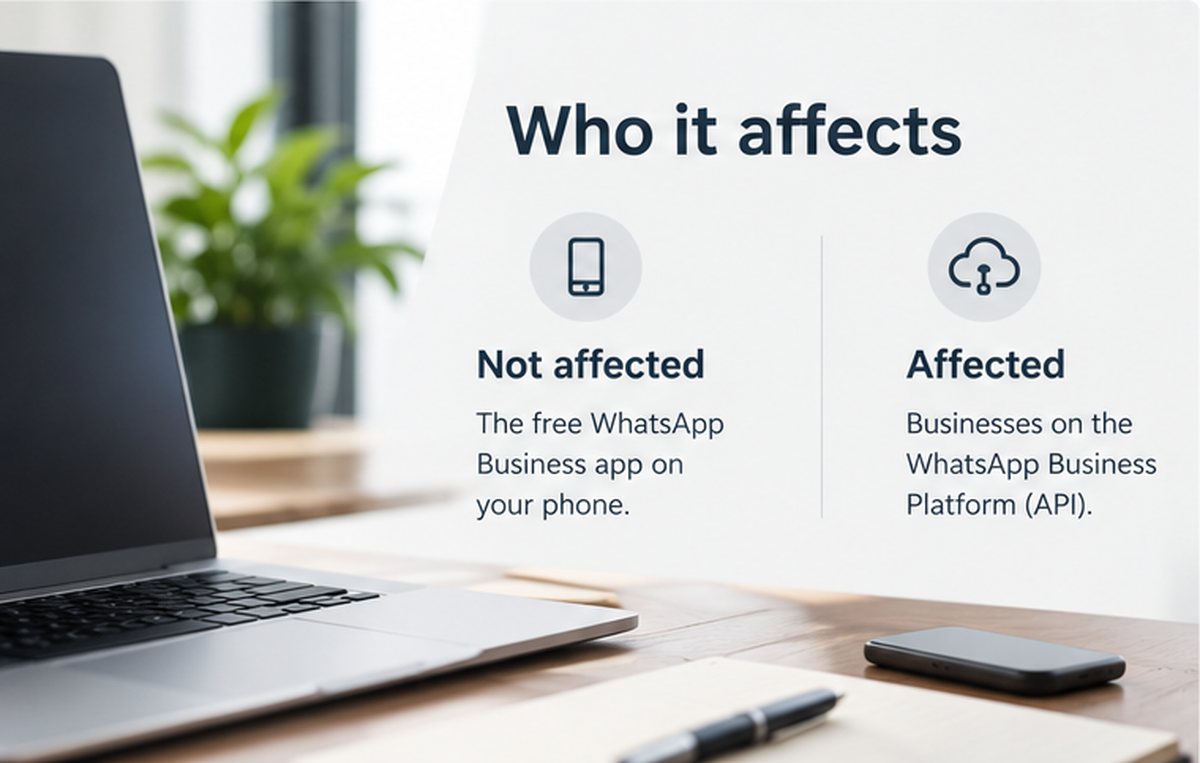
Probably not affected: the WhatsApp Business app is free to download, and the October changes are to Meta’s Platform pricing. The salon owner replying to bookings from her own phone can carry on as before.
Affected: businesses on the WhatsApp Business Platform, also called the API. You’re probably on it if:
- You use a chatbot or automated replies through a third-party provider
- Several staff answer from one shared WhatsApp inbox
- You send automatic order, booking or delivery notifications
- Your WhatsApp is connected to your online store, CRM or booking system
If you’re not sure which one you’re on, ask whoever set up your WhatsApp. It’s a five-minute question that tells you whether this article is about you.
Why this matters more than the cents
The real change isn’t the price. It’s the mindset.
When messages were free, it didn’t matter if a chatbot sent a greeting, then a menu, then a “thanks for waiting”, then the actual answer. Four messages to say one thing cost nothing. Now each of those can carry a charge.
The same goes for promotions. Blasting the whole contact list with every special was cheap and lazy. At around 63 cents a message before VAT, it’s expensive and lazy. And customers who get messages they didn’t want are more likely to mute or block you, which costs more than any rate card.
So the businesses that come out ahead won’t be the ones that message less. They’ll be the ones that make each message count.
What to do now: six steps
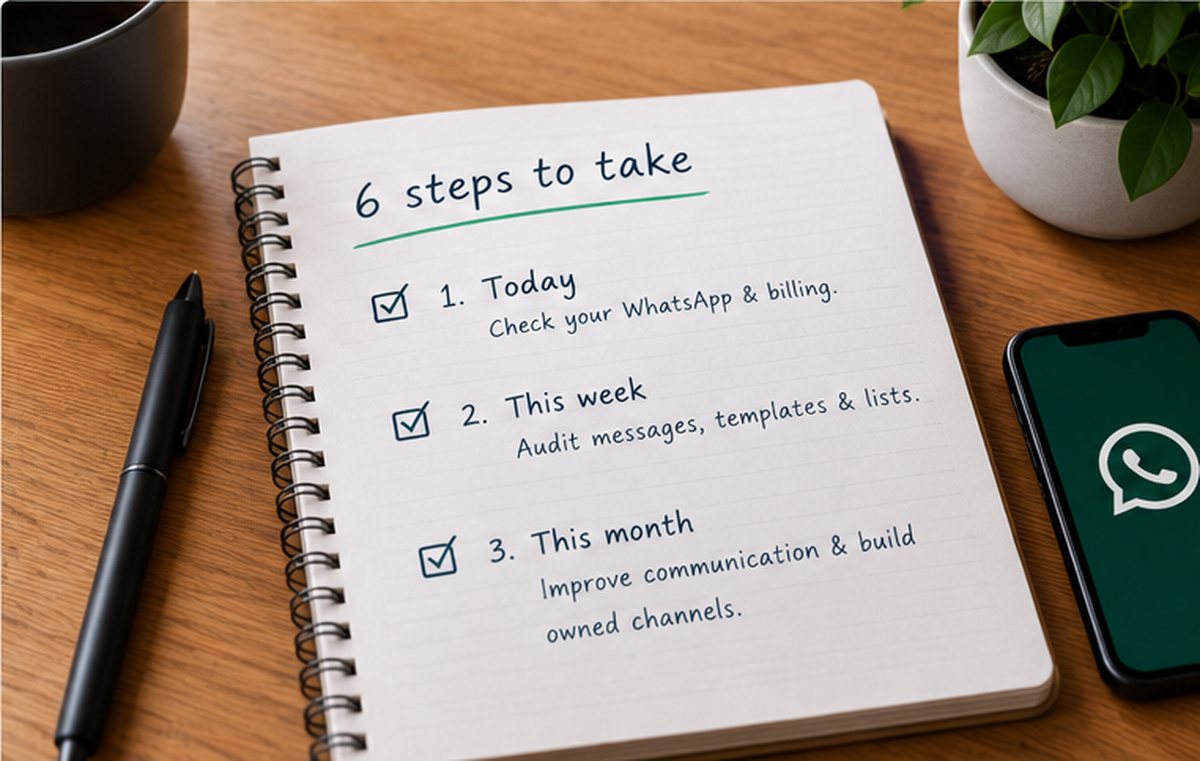
Today
- Find out which WhatsApp you’re on, and check your billing. App or Platform? If it’s the Platform, make sure a payment method is on file. Meta stopped delivering charged service messages for businesses without one. If it’s the app, skip to step 6.
This week
- Audit your automated messages and templates. How many replies, automatic updates and promotions went out last month? Most providers show this. Fewer than 1,000 replies a month per number keeps your service messages free.
- Say it in one message, not four. Cut chatbot greetings, menus and filler. Putting full details in one reply lowers your bill and stretches your free allowance further.
- Stop broadcasting, start segmenting. Send promotions only to people who’ve shown interest in that product or service. A smaller, relevant list beats a big, ignored one. It also helps you stay on the right side of the law: under POPIA, marketing by electronic message generally needs the person’s consent. The exception for existing customers is narrow and comes with a standing right to opt out, and new Consumer Protection Act regulations add a national opt-out registry to check lists against. If you’re unsure where your list stands, get legal advice.
This month
- Make your ads work harder. When a customer reaches you through a click-to-WhatsApp ad and you reply within the 24-hour window, Meta opens a free entry point window that can stay open for up to 7 days. Messages you send in it aren’t charged. Fast replies now save money, not just sales.
- Don’t put everything on one channel. WhatsApp is powerful, but it’s rented space with a meter running. Build things you own too: an email list, a website people can find, and a Google Business Profile that answers common questions before anyone has to message you.
The real question
WhatsApp isn’t going anywhere. South Africans still want to message the businesses they buy from, and that’s a good thing.
But “free” let a lot of businesses get away with noisy, unplanned messaging. Now that many messages carry a price, it’s worth asking: if each message cost you money, which ones would you still send?
Those are the ones your customers actually want. Start there.
And if you want customers to find answers without messaging you at all, read our guide on getting found when Google answers first.
WhatsApp Business charges: frequently asked questions
What are the new WhatsApp Business charges in South Africa?
Since 1 October 2026, businesses on the WhatsApp Business Platform pay for replies to customers after 1,000 free a month per number, and for utility messages like order updates even inside the 24-hour window. Marketing messages were already charged.
What’s the difference between the WhatsApp Business app and the API?
The app is free to download and runs on your phone. The API, or WhatsApp Business Platform, is for businesses messaging at scale through chatbots, shared inboxes or connected systems, and it’s billed per message.
How many free replies do I get?
Each business phone number gets 1,000 free delivered service messages a month. Unused messages don’t roll over. Order, booking and delivery updates are charged from the first message.
How much does a WhatsApp marketing message cost in South Africa?
About $0.038, or roughly R0.63, per message before VAT. The rand amount moves with the exchange rate.
Are conversations from click-to-WhatsApp ads free?
They can be. If you reply within 24 hours, Meta opens a free entry point window of up to 7 days, and messages you send in it aren’t charged.
Do I pay to receive WhatsApp messages from customers?
No. Incoming messages stay free. Charges apply to some messages your business sends.
Rethinking how your business talks to customers? We’re happy to think it through with you at hello@elyvant.co.za.